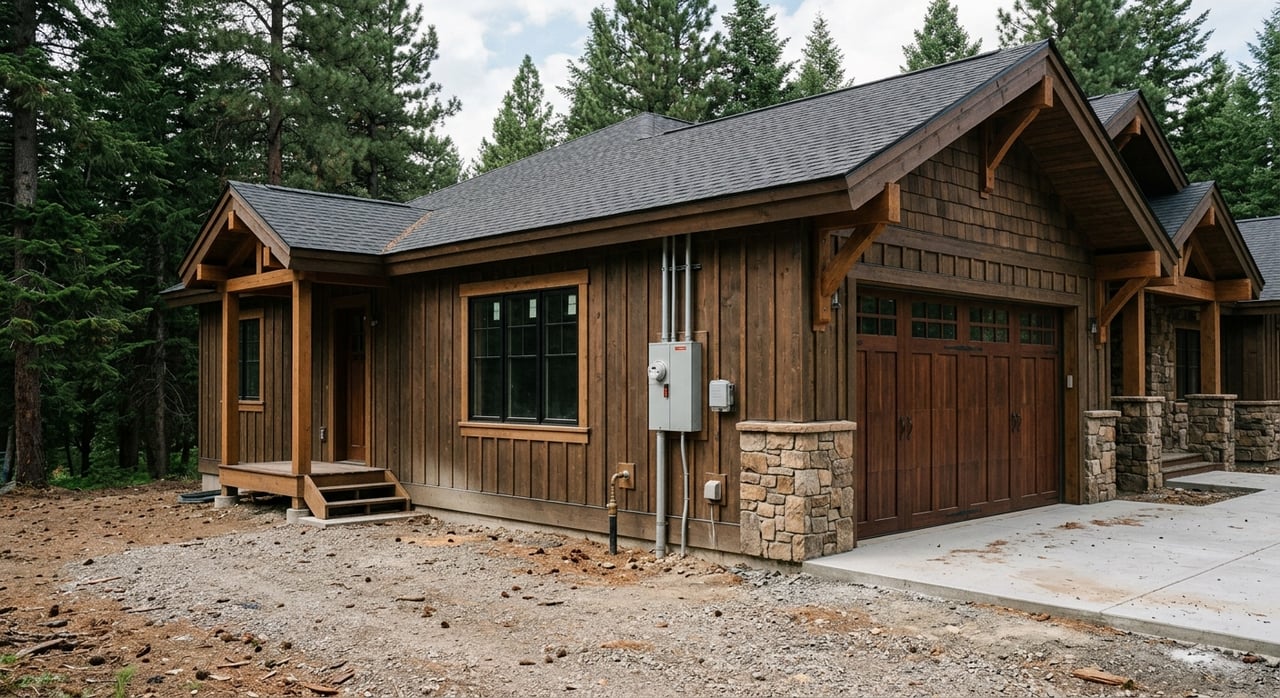
Hot Springs New Construction Lots, Builders, and Costs
May 21, 2026
May 21, 2026
If you’re thinking about building a new home in Hot Springs, it’s easy to focus on floor plans and finishes first. But here, the lot, utility access, permit path, and site prep can shape your budget and timeline just as much as the house itself. If you want to build with fewer surprises, it helps to understand how Hot Springs and Fall River County handle the process before you buy land or hire contractors. Let’s dive in.
In Hot Springs, a new build often involves several layers of review before construction starts. Within city limits, the City of Hot Springs Building/Development office handles building permits, inspections, zoning review, floodplain review, and certain contractor licensing. Plumbing and electrical permits are handled by the State of South Dakota rather than the city.
That split matters because your project may need approvals from more than one office. It also means your timeline can depend on how early you confirm permit requirements, schedule inspections, and line up contractors.
Before you price out a home, take a close look at the land. In Hot Springs, floodplain status, zoning, road access, and water or sewer service can all affect whether a lot is practical to build on.
A lot that looks affordable at first can become more expensive once you add grading, trenching, septic, utility setup, or permit-related work. That is why the lot search is often the most important early step in a new-construction plan.
Floodplain review is a major screening item in Hot Springs. The city has adopted FEMA flood-hazard maps for the community, and work inside the mapped floodplain requires an elevation certificate.
If you are comparing lots, this is one of the first questions to ask. A floodplain issue does not always stop a project, but it can change the design, paperwork, cost, and timeline.
Within city limits, whether a lot is buildable can depend on its zoning designation. Hot Springs zoning includes residential, mountain residential, greenway, mixed use, highway service, industrial, and no use districts.
That means two nearby parcels may not have the same development path. Before you commit to a lot, verify the exact zoning and ask what reviews may apply to your planned use.
Inside city limits, water, sewer, and garbage service require an application to the City Finance Office and a deposit before service begins. The city also requires residential garbage service.
Outside city limits, the picture can look very different. Fall River County notes that water access is not guaranteed in rural areas, and some parcels rely on cisterns or trucked water. The county identifies Southern Hills Water Users north of Hot Springs and Fall River Water Users east of Hot Springs as local providers in some areas.
If you are building outside the city, septic planning can be a key part of your due diligence. Fall River County says septic systems must meet state rules, and minimum lot sizes include 20,000 square feet with public water and 1 acre with a private water supply on the lot.
Those requirements can influence which parcels make sense for your plans. They can also affect the total cost to get a home site ready for construction.
A smooth build usually starts with understanding who handles what. In Hot Springs, the city oversees much of the local building and development process inside city limits, while the state handles plumbing and electrical permits.
Outside city limits, Fall River County may still become part of the process, especially for floodplain matters and certain subdivision-related approvals. This is one reason local guidance can save time when you are weighing lots near the city edge.
The Hot Springs Building/Development office handles permits, inspections, contractor licensing, and floodplain and zoning review within city limits. The city says it has adopted the 2021 International Building Codes, including the building code, existing building code, residential code, and property maintenance code.
The city fee schedule includes separate charges for trenching, excavation, site development, rezonings, variances, and subdivision review. For a new home, the building permit fee starts at $50 at the lowest valuation tier and increases with project value, with the base fee capped at $1,000.
One detail is especially important: if work starts before the required permit is obtained, the city charges four times the required fee. That makes early permit planning more than just a paperwork issue.
In Hot Springs, plumbing and electrical permits are handled through the state rather than the city. For electrical work in a new house, the state fee is $208 for 0 to 200 amps and $390 for 201 to 400 amps, with one rough-in and one final inspection.
For a single-family dwelling, state plumbing includes a $20 installation certificate and a $110 inspection fee. The state uses three plumbing inspection phases: underground, rough-in, and final. Plumbing inspection requests need at least 72 hours notice, and five business days is recommended.
If land is adjacent to the city boundary or in a subdivision next to it, approvals can become more complex. Fall River County says a plat in these cases must be approved by both the county commissioners and the city.
The county identifies adjacent subdivisions including Country Club Estates, Cedar Hills, Cold Brook Subdivision, Red Ridge Estates, and Swett Subdivision. If you are shopping for a lot in or near one of these areas, that dual approval path is worth understanding up front.
Hot Springs has a useful mix of local builders and specialty contractors, but the market appears to be organized around multiple providers rather than one all-in-one company for every phase. Based on local contractor listings, many projects may use a general contractor along with separate site-prep, septic, electrical, and insulation specialists.
That setup is not unusual, but it does mean coordination matters. If you are building from the ground up, it helps to think beyond the home builder alone and ask who will handle the lot work, utilities, and specialty systems.
Local listings show a range of services that can support new construction. Mosset Construction lists residential homes, remodeling projects, and commercial properties. Rail House Construction focuses on home-building grading, rough grades, pad prep, pad building, and driveways.
Simon Contractors lists asphalt paving, ready-mix concrete, gravel, crushed rock, grading, and excavation. Hales Electric serves new construction and other electrical needs, while Southern Hills Septic and Pirate’s Septic and Construction are local septic options. H34 Construction handles spray foam insulation and concrete lifting.
For you as a buyer, the takeaway is simple: ask early who is responsible for each part of the job. Clear scope and sequencing can help prevent delays and budget drift.
One of the biggest mistakes in new construction planning is pricing the home and underestimating everything around it. In Hot Springs, your budget should include at least four separate cost buckets:
The exact total will vary by property, but these categories are central to local planning. They can also differ sharply from lot to lot, especially when you compare in-town sites with rural acreage.
The city fee schedule lists trenching at $25, excavation at $25 or $50, and site-development permits at $150 to $500 depending on size. It also lists minor subdivision review at $150, major subdivision and PUD review at $750, along with fixed fees for rezonings and variances.
These line items show why due diligence matters before you buy land. Even modest fees can add up once a project needs several reviews or layers of site work.
A broad 2024 benchmark from NAHB says construction costs made up 64.4% of the average new-home sales price, while finished lot costs made up 13.7%. That is not a Hot Springs-specific price quote, but it is a useful reminder that the lot is a meaningful part of the total cost, not just the place where the home sits.
In practical terms, that means a less expensive parcel is not always the better value. If it needs more grading, water planning, septic work, or permit coordination, the total project cost can change quickly.
Hot Springs climate normals show about 32.0 inches of annual snowfall. Winter and early spring snowfall are concentrated in the months most likely to complicate grading and foundation timing.
That means your build calendar may be more season-sensitive than in warmer markets. If you want to break ground on a certain schedule, it helps to line up land review, contractor conversations, and permit planning as early as possible.
If you are deciding between several lots, keep your review process simple and consistent. Ask the same core questions on each property so you can compare real costs and risks, not just asking price.
Use this checklist as a starting point:
This kind of side-by-side review can help you avoid surprises after closing. It also gives you a stronger foundation for builder and contractor conversations.
Building new in Hot Springs can be rewarding, but it is rarely just about choosing a floor plan. You are also choosing a lot, a utility path, a permit route, and a team to help bring the project together.
That is where local market knowledge matters. When you understand how city rules, county conditions, and property-specific details fit together, you can make better decisions before you spend money on land, plans, or site work.
If you are exploring lots, acreage, or homesites in and around Hot Springs, Joel Hawkins can help you evaluate properties with a practical local lens and schedule a free consultation.
Stay up to date on the latest real estate trends.
We are committed to guiding you every step of the way—whether you're buying a home, selling a property, or securing a mortgage. Whatever your needs, we've got you covered.
Address 106 S Chicago St Hot Springs SD 57747