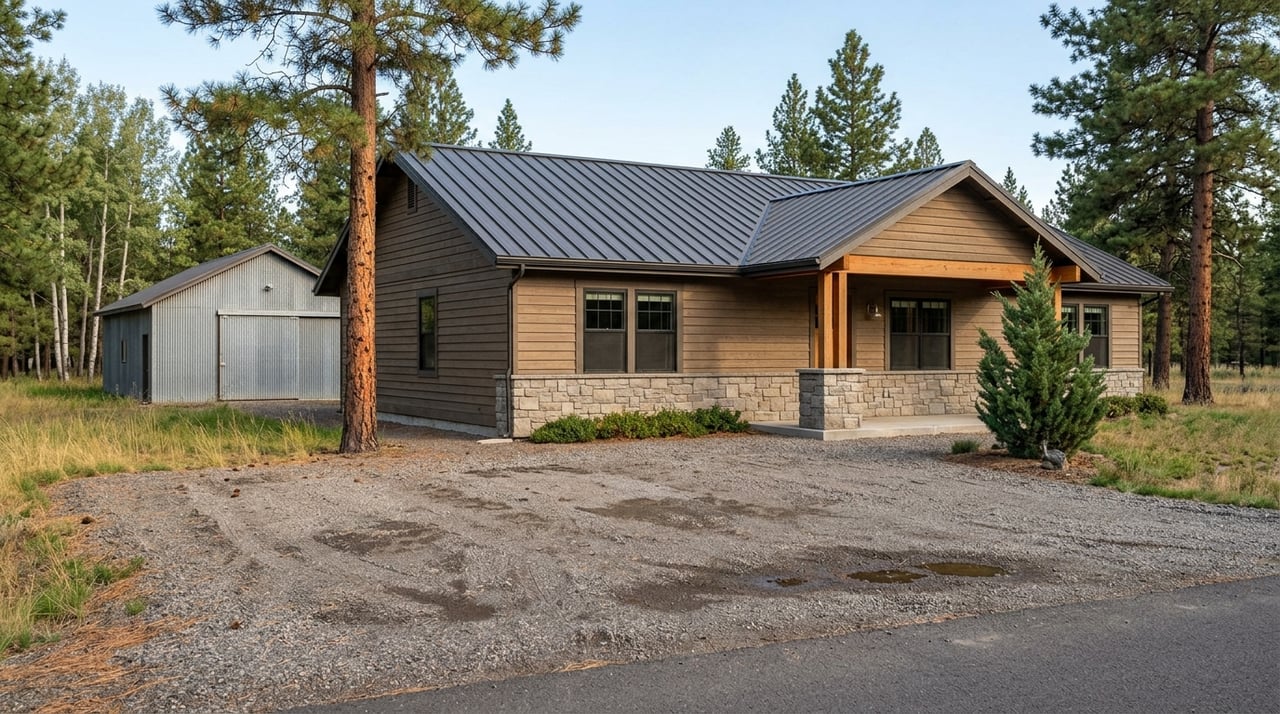
Hot Springs Land and Acreage: What Buyers Need to Watch
July 9, 2026
July 9, 2026
Wondering whether that perfect-looking acreage near Hot Springs is actually usable for what you have in mind? In this market, a beautiful view and a few extra acres do not always tell the full story. If you are thinking about buying land in Hot Springs or the surrounding Fall River County area, it helps to know what can affect buildability, access, utilities, and long-term use before you fall in love with a parcel. Let’s dive in.
Hot Springs land is shaped by two realities at the same time. On one hand, you have the appeal of the southern Black Hills, with easy access to hiking, fishing, boating, and nearby state and national parks. On the other, rural property in this area often comes with practical questions that matter just as much as the scenery.
That means the local land market is not just one market. A lot inside city limits, a parcel in a subdivision near town, and open county acreage farther out can all come with very different rules, services, and costs. If you are shopping for land here, your first job is to understand which type of property you are actually looking at.
Before you focus on price per acre or the view from the building site, find out whether the property is inside Hot Springs city limits, in an adjacent subdivision, or in unzoned county land. That one detail can change the approval process, utility setup, and what uses may be allowed.
Inside Hot Springs, land use is governed by a defined zoning system. Districts include residential, mountain residential, mixed-use, highway service, industrial, greenway, no use, golf course, planned unit development, and airport districts.
In practical terms, that means a parcel near town is not automatically a blank slate. Depending on the district, it may be better suited for residential living, highway-oriented activity, or more limited use. Buyers should confirm that the zoning district fits their intended use before moving forward.
Outside Hot Springs and Edgemont, Fall River County states that there is no county planning and zoning. Even so, that does not mean every parcel is free of oversight or restrictions.
If a property is next to the city boundary or located in a subdivision near the city boundary, approval may still be required from both the county commissioners and the city. That is especially important for edge-of-town acreage, where platted subdivisions may be regulated differently than larger rural tracts farther away.
A five-acre parcel is not always more buildable than a one-acre parcel. In the Hot Springs area, land value often depends less on raw size and more on whether you can realistically access water, septic, power, and legal road access.
Inside town, water, sewer, and garbage service are city utilities. Customers apply through the City Finance Office, and the city requires the appropriate deposit before service begins. The city also requires residential garbage service.
That can make in-town development more straightforward, though it comes with a more formal utility process. Outside town, the picture can be very different.
Fall River County warns that not every rural property has access to water. In many areas, rural water service is unavailable, and some parcels rely on private wells, cisterns, or hauled water. If you are considering acreage, ask about the water source before you schedule a second showing or write an offer.
If a parcel uses a private well, treat it as a system that deserves real due diligence. South Dakota rules require a well driller to be licensed before drilling or contracting to drill a well. The state also requires each new domestic well to be sampled for bacteria and selected chemicals.
For buyers, that means a well is more than a nice feature on a listing sheet. You will want clear information about the well itself and how the property’s water supply is expected to function.
Septic is another issue that can make or break a land purchase. South Dakota onsite wastewater rules set minimum lot sizes of 20,000 square feet for a water-carriage wastewater system when public water is available, and 43,560 square feet, or 1 acre, when potable water is supplied by a private water system located on the lot.
Even if a parcel meets those basic size standards, the county notes that topography and setbacks can still create problems. In other words, lot size alone does not guarantee septic approval.
Electric service is not available everywhere in Fall River County, and the county notes that extending service can be expensive. A parcel that looks affordable at first glance may need a larger budget if power lines are far away.
Road access matters too. If a driveway exits directly onto a county road, the owner must obtain an approach easement from the county highway superintendent. The county also notes that subdivision roads are often maintained by the landowners who use them, and many unpaved roads are rough, dusty, and not likely to be paved soon.
A parcel may look wide open on the ground while still being shaped by recorded documents and local rules. That is why title and land-use due diligence matter so much in the Hot Springs acreage market.
Fall River County records deeds, easements, mortgages, covenants, plats, contract for deeds, and assignments. The county’s rural buyer guidance warns that many subdivisions and planned unit developments have covenants that limit how property can be used.
If you are buying in a subdivision or on the edge of town, ask for the recorded plat and any covenants early in the process. If there are no covenants, that should be confirmed rather than assumed.
The county also warns that fences and plats do not always match. A survey is the only way to confirm property lines.
That matters if you are planning a home site, outbuilding, fence, driveway, or pasture use. It also matters if you want confidence that the boundaries on paper match what you believe you are buying.
Floodplain questions can affect both building plans and permit requirements. The City of Hot Springs has adopted FEMA flood hazard maps for special flood hazard areas and requires an elevation certificate for work within a mapped floodplain.
The county also requires a permit to build within the flood plain and directs buyers to GIS for location verification. If a parcel includes low spots, creek areas, or land near waterways, this should be part of your early review.
Some buyers prefer land inside city limits because utilities and approvals can be more predictable. That can be a real advantage if you want a more straightforward path to building or improving a property.
Hot Springs says its Building and Code Official enforces the International Building Code, and permits are required for many common projects. That includes reroofing, additions, porch or deck reconstruction, certain window and door changes, accessory structures, taller fences, and some retaining walls.
The city’s zoning framework also addresses setbacks, permitted uses, accessory structures, parking, signage, home occupations, non-conforming uses, variances, and right-of-way vacations. For many buyers, that structure feels more predictable than a remote parcel with unknown utility or access issues.
Two city zoning categories deserve extra attention. The No Use district can prohibit permanent structures while land is pending study, and it is often used for newly annexed areas.
The Airport Zone can also affect parcels near the municipal airport. These are not details most buyers can spot from a photo, which is why checking the zoning map and district rules early is so important.
Buying outside town can offer privacy, elbow room, and a true Black Hills lifestyle. It can also come with practical tradeoffs that buyers sometimes underestimate.
Fall River County’s Code of the West notes that subdivision roads are often the responsibility of the landowners who use them. It also warns that unpaved roads may be rough and dusty, mail and parcel delivery can be inconsistent, and trash removal may cost more outside town.
Power outages may also be more common in outlying areas. If a property depends on a well, a power outage can interrupt your water supply too.
If you plan to clear brush or maintain a burn pile, do not assume it is automatically allowed. Fall River County has an emergency burn-ban ordinance for areas outside municipalities during certain fire-danger conditions.
The county’s rural guidance also says buyers should check open burning laws and permit requirements before making plans. This is especially important if your vision for the property includes cleanup, recreation fires, or seasonal land management.
If you want acreage for livestock, pasture, or a hobby farm, ask more detailed questions. County guidance notes that some land is open range, which may mean livestock owners need to fence animals out rather than in.
The county also warns that mineral rights may not transfer with the surface estate, water rights should be checked carefully, and soil, slope, and low precipitation can limit both grazing and building potential. In this area, land use is often shaped more by water and terrain than by how many acres appear on the listing.
If you are comparing land listings in Hot Springs and surrounding Fall River County, keep your due diligence focused on the basics that matter most.
In the Hot Springs land and acreage market, the smartest buyers think in layers. First comes jurisdiction, then utilities and septic feasibility, then recorded restrictions, and only after that the lifestyle features that drew you to the property in the first place.
That approach helps you avoid expensive surprises and focus on parcels that truly fit your goals. If you want local guidance as you sort through lots, acreage, hobby farm property, or rural land near Hot Springs, connect with Joel Hawkins for a free consultation.
Stay up to date on the latest real estate trends.
We are committed to guiding you every step of the way—whether you're buying a home, selling a property, or securing a mortgage. Whatever your needs, we've got you covered.
Address 106 S Chicago St Hot Springs SD 57747