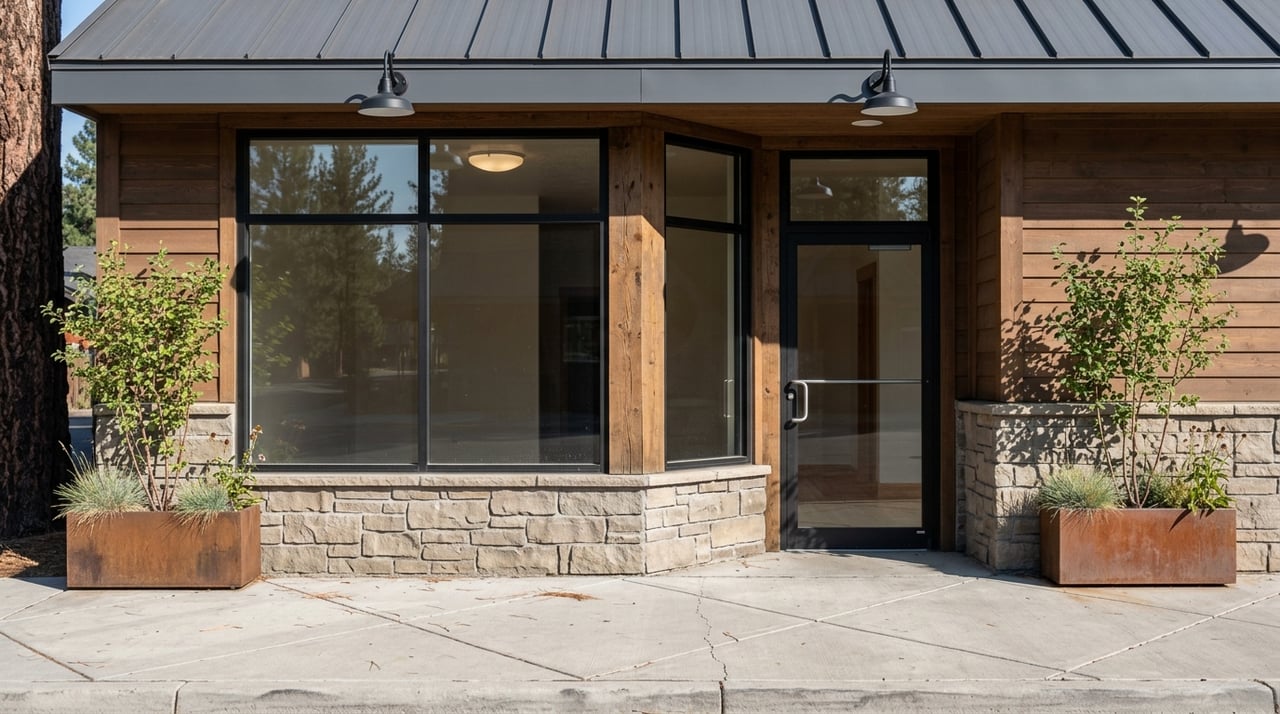
Custer Commercial Real Estate: Tourism-Focused Opportunities
July 16, 2026
July 16, 2026
If you are looking at commercial real estate in Custer, the big question is not just what is for sale. It is whether a property can match the town’s tourism rhythm, local demand, and practical zoning rules. In a market this size, the right fit matters more than chasing square footage alone. This guide will help you understand where tourism-focused opportunities tend to show up in Custer, what property types make sense, and what to weigh before you buy. Let’s dive in.
Custer is a small commercial market by any standard. Custer County had 8,318 people in the 2020 Census and an estimated 9,431 residents in July 2025, with 327 employer establishments and 1,536 total employment reported in 2023. That means many local commercial properties depend on a mix of resident spending and visitor traffic, not just year-round local demand.
That visitor piece is significant. South Dakota reported 14.9 million visitors and $5.09 billion in visitor spending in 2024, along with 8.7 million visits to state parks and 3.8 million visits to national parks. For Custer, that broader tourism economy helps support small retail, lodging, dining, and service-oriented businesses tied to the Black Hills travel season.
The clearest demand engine near Custer is Custer State Park. Official state information shows park visitation rising from 1.86 million in 2015 to 2.30 million in 2024 and 2.354 million in 2025. Traffic builds in spring, peaks in summer, and concentrates heavily from June through September.
July alone brought more than 420,000 monthly visitors. That kind of seasonal concentration helps explain why so many commercial opportunities in and around Custer lean toward tourism-serving uses. If your concept depends on visibility, convenience, or summer traffic, this pattern matters.
The park also supports more than one kind of business model. State materials identify lodging, food and beverage, retail stores, rentals, guide services, catering, and automotive fuel sales as part of the service mix connected to park demand. Major events create additional spikes, including the Buffalo Roundup, which drew a record 22,590 visitors in 2024.
Downtown Custer is built around a historic commercial core. The city’s comprehensive plan describes this area as a center for dining, retail, and other visitor-oriented businesses, with an emphasis on redevelopment, infill, and preservation. If you want walkable access and steady tourist foot traffic, this is often the first area to study.
In practical terms, that can mean small retail spaces, office-retail combinations, or mixed-use buildings that serve both visitors and local residents. Recent listing examples in the market reflect exactly that pattern, with small storefronts and mixed-use buildings showing up more often than large conventional commercial inventory.
Custer can be a strong fit for mixed-use assets when the building and zoning line up. A local housing study specifically recommended a downtown mixed-use project with commercial space on the first floor and rental units above, noting that this type of building would be an asset to downtown Custer.
For you as a buyer, that matters because it shows local support for properties that combine business use with residential income. A well-placed mixed-use building may offer flexibility over time, especially in a market where seasonality can make multiple income streams attractive.
Tourism-focused hospitality remains one of the most obvious commercial categories in Custer. Current listings have included a 64-key hotel and a campground or recreational hospitality asset, which shows that the local inventory is not limited to storefronts alone.
If you are considering lodging, the location and layout become especially important. Properties near major travel routes or park corridors may be better positioned for guest turnover, parking, and visibility, while downtown sites may appeal more to visitors who want a walkable base.
Some concepts need easy vehicle access more than downtown charm. In Custer, that often points buyers toward the Highway Commercial District, where uses such as drive-in eating and drinking places, hotels, motels, retail sales, professional services, and short-term rentals are permitted.
This district can be a practical match if your concept depends on parking, signage visibility, or a more spread-out site plan. It may also suit buyers looking for service-oriented commercial property that needs more room than a traditional main street parcel can offer.
Downtown Custer offers walkability and a visitor-facing setting. The city’s plan supports the area as a pedestrian-oriented commercial core, making it a natural fit for retail, dining, and other customer-facing uses that benefit from people exploring the area on foot.
Downtown can also be attractive if you value historic character or want a smaller-format building with flexible use potential. The trade-off is that site size, parking, and building layout may be more constrained than they would be along a highway corridor.
The Highway Commercial District is generally the better fit when your business needs parking, visibility, and a car-oriented layout. City code requires a minimum lot area of 7,500 square feet, a minimum width of 50 feet, off-street parking and loading, permanent foundations, and municipal water and sewer for non-accessory structures.
Those standards make corridor parcels a better match for larger-format commercial uses, lodging, and some service businesses. If your operation depends on easy arrivals, larger signs, or room to expand, the highway corridor may offer a better starting point than a tight downtown site.
Zoning can shape your options as much as the building itself. In Custer’s Central Business District, permitted principal uses include business services, professional services, eating and drinking establishments, short-term rentals, hotels and motels, retail sales, signs, and other visitor-serving uses.
In the Highway Commercial District, permitted principal uses include drive-in eating and drinking places, short-term rentals, motels and hotels, retail sales, professional services, public storage facilities, and even some residential uses. That range gives buyers flexibility, but only if the parcel, structure, and intended use all fit the district requirements.
Before you move too far into underwriting, it helps to confirm the district, allowed use, parking needs, and utility requirements. In a market with a limited supply of specialized properties, that early review can save time and help you compare options more clearly.
If you are looking outside city limits, the process changes. Custer County’s planning information states that the county currently has no zoning or building codes, but commercial projects still face subdivision and land-use review through Ordinance #2, along with planning review for approach, septic, and related permits.
The county ordinance treats commercial developments as retail, wholesale, and service businesses, including activities such as food and drink, overnight lodging, storage, and medical services. It also requires building and grading permits for new commercial buildings, wastewater approval, a minimum lot area of one acre for each major use, and off-street parking as needed.
That can make county or edge-of-town sites attractive for land-intensive concepts. It also means your due diligence should focus closely on access, septic, wastewater, lot size, and subdivision questions before you commit.
Leasing can make sense if you want to test demand, preserve capital, or stay flexible in a market shaped by summer peaks and event-driven revenue. In Custer, that flexibility can be useful, especially if you are entering a new concept or trying to match staffing and inventory to seasonal traffic.
If you lease, pay close attention to buildout responsibilities, signage rights, parking, exterior maintenance, and snow removal. The city has specific sidewalk snow-removal rules in commercial districts, and those operating obligations can affect day-to-day costs.
Ownership may be more appealing if you want to customize the property, hold for long-term tourism upside, or combine commercial and residential income. In a market with recurring interest in mixed-use and hospitality assets, ownership can offer more control if the location and use are well matched.
When you look at Custer commercial real estate, start with the demand driver first. Ask whether the property is positioned for downtown foot traffic, highway visibility, or a land-intensive tourism or service use outside city limits.
Then compare the basics:
In Custer, the strongest opportunities are often the ones that stay simple and fit the market. Small-format, visitor-serving assets with flexible use potential tend to align best with the town’s scale and tourism-driven economy.
If you are weighing a storefront, mixed-use building, hospitality asset, or edge-of-town commercial parcel in Custer, a local read on zoning, location trade-offs, and buyer demand can make a real difference. For tailored guidance on commercial property in the southern Black Hills, connect with Joel Hawkins.
Stay up to date on the latest real estate trends.
We are committed to guiding you every step of the way—whether you're buying a home, selling a property, or securing a mortgage. Whatever your needs, we've got you covered.

Address 106 S Chicago St Hot Springs SD 57747