Hot Springs Rental Property Market for Smart Investors
July 23, 2026
July 23, 2026
Looking at rental property in Hot Springs can feel a little different than sizing up a bigger Black Hills market. This is not a place where you can lean on a huge apartment pipeline or endless sales comps. If you want to invest here, you need a clear view of local demand, realistic rent expectations, and the kinds of properties that fit how people actually live in Hot Springs. Let’s dive in.
Hot Springs is a small, mature market with about 3,548 residents and 1,885 households. Fall River County is also low-density, with 7,258 residents spread across a large geographic area. That smaller scale matters because rental demand exists here, but it is not as broad or fast-moving as in larger regional markets.
The city also trends older, with a median age of 59.4. Household size is small at an average of 1.7 people per household. In practical terms, that points many investors toward smaller, easier-to-manage rental homes and small multi-unit properties rather than large, high-maintenance houses.
Hot Springs is still mostly a single-unit housing market. About 69% of housing structures in the city are single-unit, and about 62% of occupied homes are owner-occupied. That leaves an implied renter share of about 38% in Hot Springs, which is meaningful, but still shows that rentals are a smaller slice of the overall market.
Countywide, the renter share is lower at about 28%. That makes the city of Hot Springs the more focused place to watch if you are considering long-term rentals or a duplex, triplex, or small apartment building. Demand is there, but it tends to be concentrated in a limited in-town housing stock rather than spread across a large apartment corridor.
The strongest year-round demand anchors in Hot Springs come from healthcare and veteran-serving institutions. The Hot Springs VA Medical Center provides primary and specialty care, and the local healthcare network also includes Fall River Health Services, which operates a 25-bed critical access hospital, a 24-hour emergency room, a rural health clinic, and a nursing home.
The Michael J. Fitzmaurice State Veterans Home adds another layer of local housing demand. Hot Springs and Fall River County also have veteran populations that are higher than the state average. For investors, that helps explain why lower-maintenance housing and practical layouts may have steady appeal.
There is also some family-oriented demand, though it appears smaller than in more suburban markets. Hot Springs School District reported 739 PK-12 students in fall 2023. That supports the idea that renters here may include healthcare workers, retirees, school employees, and some families, rather than one dominant renter group.
Hot Springs benefits from nearby attractions and year-round destinations. Wind Cave National Park is 11 miles north, the Mammoth Site operates year-round in town, Evans Plunge offers year-round swimming, and Fall River Flight Fest brings a late-August event weekend.
Those attractions can support some lodging demand, seasonal work, and occasional extended-stay needs. Still, for a long-term rental or small multi-unit purchase, the safer underwriting approach is to base your numbers on year-round lease demand. Tourism can be a bonus, but it should not be the main reason a deal works.
In Hot Springs, the opportunity in small multifamily is likely to be limited and selective. Because the local housing stock is dominated by single-unit homes, duplexes, triplexes, fourplexes, and small apartment properties may be harder to find. When they do come up, they may be older in-town assets or properties with value-add potential.
That scarcity can work in your favor if you buy well and manage carefully. It can also make due diligence more important because comparable sales and reliable rent comps may be thin. In a market like this, every property detail carries more weight.
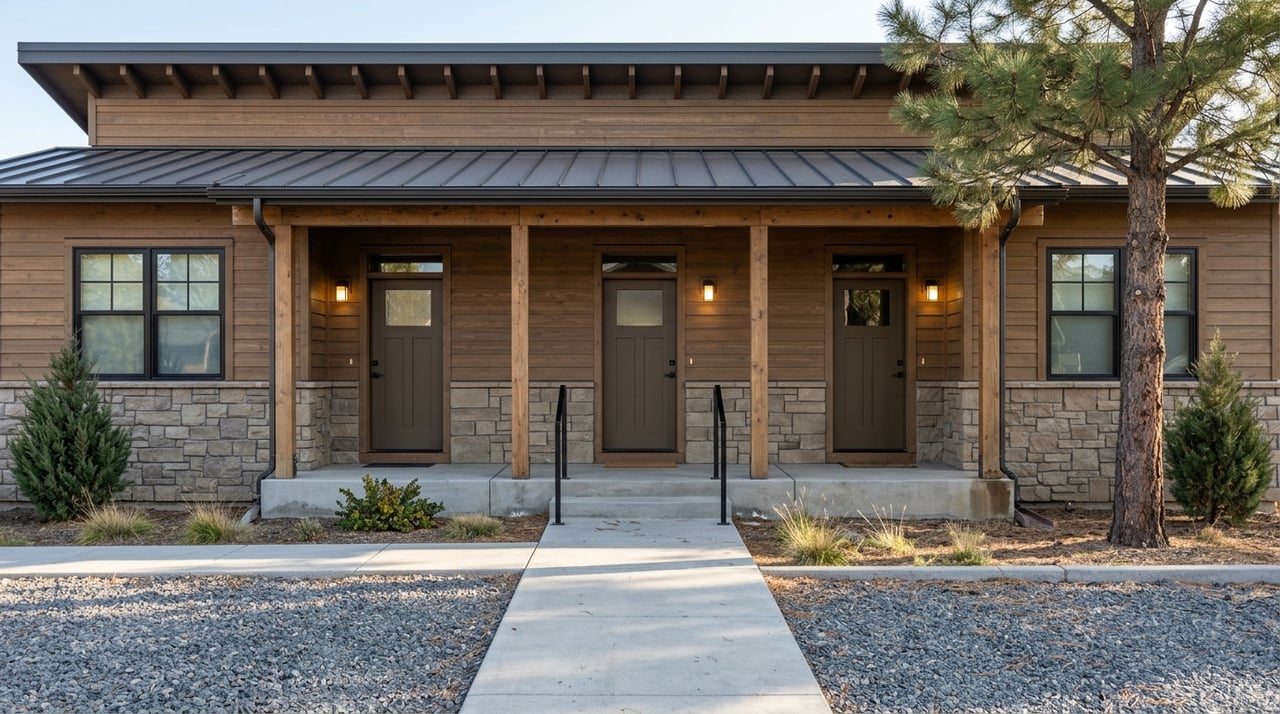
Based on the city’s age and household profile, one- and two-bedroom units may be easier to position than oversized rentals. Single-level floor plans, off-street parking, and low-maintenance exteriors may also line up well with local demand. That is not a rigid rule, but it is a practical way to think about product fit.
One of the biggest mistakes investors make in small markets is assuming that a nicer remodel always supports a large rent jump. In Hot Springs, affordability matters. Median household income is $66,338 in the city and $67,917 countywide, while the city poverty rate is 21.1%.
That does not mean you should avoid updates. It means your renovation plan should match what the market can actually support. Durable improvements, easier maintenance, and functional upgrades may pay off more reliably than high-end finishes that push rents beyond what local households can comfortably absorb.
For Fall River County, HUD’s FY2025 Fair Market Rent benchmark is $819 for a one-bedroom, $1,077 for a two-bedroom, $1,302 for a three-bedroom, and $1,729 for a four-bedroom unit. Fair Market Rent is not the same thing as a live market rent comp. Still, it can be a helpful sanity check when you are pressure-testing your assumptions.
If your projected rent is well above those levels, pause and look harder at the unit’s condition, utility setup, parking, and exact location within town. In a thin market, being aggressive on rent can quickly affect vacancy and turnover.
Hot Springs has about 1,933 housing units, and roughly 98% are occupied. That sounds tight, but small markets can behave differently than large ones. A single property’s condition, management quality, layout, or repair history can have an outsized impact on its actual performance.
This is why conservative underwriting matters. Build in realistic vacancy, repair reserves, and capital expenditure planning from day one. If a roof, siding project, plumbing issue, or turnover hits in a small asset, it can change your returns much faster than you might expect.
When you evaluate a rental or small multi-unit property in Hot Springs, focus on practical details first.
In a market with limited public comp data, the property itself often tells the story. A well-kept asset with a functional layout can outperform a prettier property that is harder to maintain or overpriced for the local renter base.
In a market this size, local knowledge is not just helpful. It is part of the investment strategy. Public listings and broad data sets may not fully show how one block, one layout, or one management issue can affect performance.
That is where a local broker can bring real value. If you are buying a duplex, fourplex, or another small investment property in Hot Springs, it helps to work with someone who understands the in-town rental stock, the limited supply of multifamily options, and how local buyers and sellers price these assets.
The best rental investments in Hot Springs are often the ones that stay simple. Think smaller units, practical updates, manageable maintenance, and rent levels that fit local incomes. In a niche market, consistency usually matters more than chasing a big upside story.
If you are moving from single-family investing into duplexes, triplexes, or small apartment buildings, Hot Springs can offer opportunity. You just need to approach it with careful underwriting, patience, and a strong read on the local housing stock.
If you want help identifying investment-friendly properties in Hot Springs or understanding how a specific listing fits this market, Joel Hawkins can help you evaluate the opportunity with local insight and practical guidance.
Stay up to date on the latest real estate trends.
We are committed to guiding you every step of the way—whether you're buying a home, selling a property, or securing a mortgage. Whatever your needs, we've got you covered.

Address 106 S Chicago St Hot Springs SD 57747