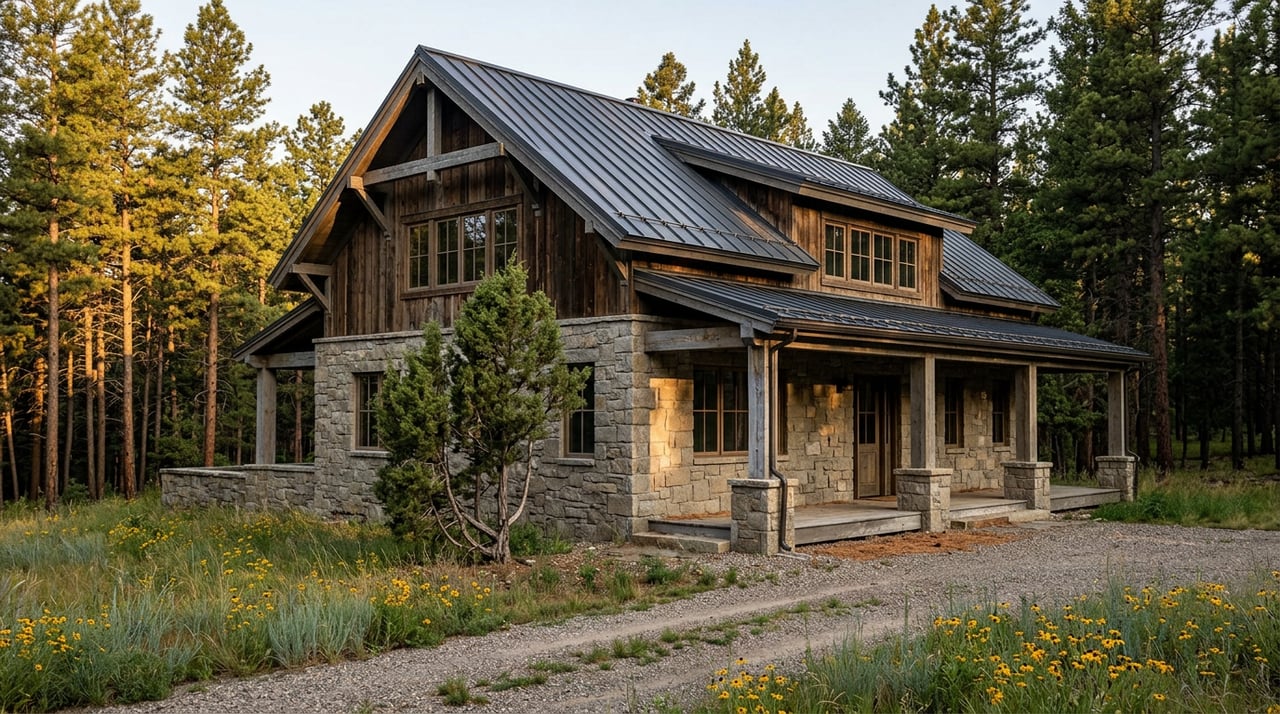
The Real Cost of a Hot Springs Sandstone Home Shows Up After the Offer Is Signed
September 10, 2026
September 10, 2026
Walk two blocks of River Street or Chicago Street in Hot Springs and count the storefronts that aren't built from pink and tan sandstone. You'll run out of blocks before you run out of buildings to skip. The city's own history page and Wikipedia both put the downtown count at just over 35 sandstone structures, while an older state historical marker counts closer to fifty. Nobody has bothered to reconcile the two, because in a town this size, the exact number matters less than the fact that it's everywhere.
That abundance creates a quiet assumption among buyers: if the town is this saturated with historic stone, a sandstone property must be one of the more affordable ways into Hot Springs real estate. The list price often backs that up. What buyers don't see until they're already under contract is that the stone itself, not the price tag, is what an insurance underwriter and an appraiser will spend the most time arguing about before you get to the closing table.
Hot Springs owes its look to Fred T. Evans, a freighter and transportation entrepreneur who arrived during the Black Hills gold rush and stayed to build a health resort around the town's mineral springs. Evans built the five-story hotel that anchored downtown in 1891 and 1892 using pink sandstone hauled four miles from his own quarry, and he wasn't alone. Most of the pink stone that built the town came from that same Evans Quarry, which operated from the 1880s until 1928. The Minnekahta Block, the Fall River County Courthouse, the sandstone hotel now operating as the Red Rock River Resort, and the four-story building that served as a school until 1961 and now houses the Fall River Pioneer Museum all came out of the same handful of local quarries.
None of those quarries are still cutting stone. That single fact is the hinge this whole piece turns on. When a builder in 1893 needed a matching block, he sent someone to the quarry. When a homeowner in 2026 needs a matching block, there is no quarry to send anyone to.
The city formally recognized what it had in 1974, when it created the Hot Springs Historic District, an irregularly shaped boundary drawn specifically to protect the historical, archaeological, architectural, and cultural heritage of the buildings inside it. Not every sandstone structure in town falls inside that boundary, which matters more than it sounds like it should once you get to the tax credit conversation below.
The stone that makes these buildings desirable is the same stone that makes them expensive to insure correctly.
Hot Springs has a reputation as one of the more affordable Black Hills markets, and the headline numbers support that. As of early September 2026, closed-sale data for the city points to a median sale price near $374,000, up nearly 25 percent from a year earlier, with the typical home taking around 100 days to sell and closing roughly 5 percent under its final list price. Listing prices for the same period sit meaningfully higher than that closed number, which tells you the market is still working through a gap between what sellers ask and what buyers actually pay.
That gap and that timeline aren't unique to sandstone properties. But a home built from a material nobody quarries anymore adds a layer to the process that a stick-built ranch from 1985 never has to clear: getting an accurate insurance quote and an accurate appraisal before your financing contingency runs out. A property like the Water, Light & Power Building currently on the market on N River Street, one of the larger sandstone commercial buildings available in town, is a useful example of exactly what that extra layer looks like in practice.
Most homeowners insurance quotes start with a generic cost-per-square-foot calculator. Those calculators are built around modern materials: vinyl siding, engineered lumber, drywall. They were never designed to price a wall built from hand-cut stone that has to be sourced from a different quarry entirely, if it can be sourced at all. Insurance specialists who work with older masonry properties note that stone construction can run up to 50 percent more to rebuild than an equivalent brick structure, a gap that a generic calculator simply won't catch.
The industry breaks replacement coverage into three tiers, and the difference between them is where sandstone owners get caught off guard.
| Coverage type | What it actually pays for | Where sandstone owners get exposed |
|---|---|---|
| Actual Cash Value | Repair cost minus depreciation for age and condition | Depreciates the very thing that makes the building valuable |
| Functional Replacement Cost | A modern equivalent that serves the same function | Would replace stone walls with siding, not stone |
| Full Replacement Cost | Materials of like kind and quality | The only tier that actually rebuilds in stone, and the one most likely to require a specialist underwriter |
If your policy is written to the purchase price rather than the true cost of rebuilding with matching material, a partial loss such as a chimney fire or storm damage to a facade can pay out at a fraction of what the repair actually costs. Getting this right up front means asking for a restoration appraiser rather than accepting the default valuation your lender's preferred carrier runs during underwriting. That single request, made before your inspection period closes, is the difference between a policy that protects the building you're buying and one that protects a generic building the same size.
Here's the part most buyers never hear about until it's too late to use it: South Dakota has two programs built specifically to offset the extra cost of keeping a historic building historic, and both apply to Hot Springs stone.
The state offers a 20 percent income tax credit for rehabilitating historic, income-producing buildings that are listed on the National Register of Historic Places. That credit is aimed at commercial buyers, not owner-occupied residential purchases, so it applies more directly to something like a downtown storefront than a private home.
Separately, the South Dakota State Historical Society administers the Deadwood Fund, financed by a share of Deadwood's gambling revenue, which awards grants ranging from $1,000 to $25,000 for projects that retain, restore, or rehabilitate historic buildings, structures, and archaeological sites across the state for commercial, residential, or public purposes. Unlike the tax credit, this one is open to residential projects, which makes it the more relevant lever for a family buying a sandstone house rather than a sandstone storefront.
Both programs require an application before or during the rehabilitation work, not after. A buyer who lines up insurance, appraisal, and grant paperwork in the same window they're already working through inspection and financing contingencies can walk into closing with the extra cost of stone construction partially offset before the first invoice arrives.
A short list worth working through with your lender and insurance agent before you go under contract on any sandstone property in Hot Springs:
The sandstone that gives Hot Springs its identity is not a cosmetic detail you inherit along with the deed. It is a material with a finite, no-longer-produced supply, and that scarcity shows up on the insurance underwriter's desk and the appraiser's report long before it shows up as a line item on your closing disclosure. Buyers who treat a sandstone listing like any other older home tend to find this out during their financing contingency, when there's little time left to fix it. Buyers who ask the right questions before writing the offer tend to find out there's actual state money on the table to help.
Does every sandstone building in Hot Springs qualify for the state's 20 percent tax credit? No. That credit applies only to income-producing buildings listed on the National Register of Historic Places. A private residence generally won't qualify unless it's operated as a rental or business property.
Is a home inside the Historic District automatically listed on the National Register? Not necessarily. The two designations are related but separate, and a property can carry one without the other. Confirm both statuses individually with the city and the state historic preservation office.
Will a standard homeowners policy even cover a sandstone building? Most standard carriers will write a policy, but the default valuation they use is built for modern construction. Ask specifically for full replacement cost coverage matched to the cost of rebuilding in stone, and expect that quote to come in higher than a generic estimate.
If you're weighing one of Hot Springs' sandstone properties against a newer build elsewhere in the Black Hills, the numbers above are exactly the kind of thing worth running past someone who works this market every day. Heartland Real Estate can walk you through what a specific building's insurance and financing timeline is likely to look like before you write an offer, not after. Schedule a free consultation and bring your questions about the stone with you.
Stay up to date on the latest real estate trends.
We are committed to guiding you every step of the way—whether you're buying a home, selling a property, or securing a mortgage. Whatever your needs, we've got you covered.
Address 106 S Chicago St Hot Springs SD 57747